Maui Whale Season

October and November bring the first whale sightings. December through March is considered whale season, with February as the peak.

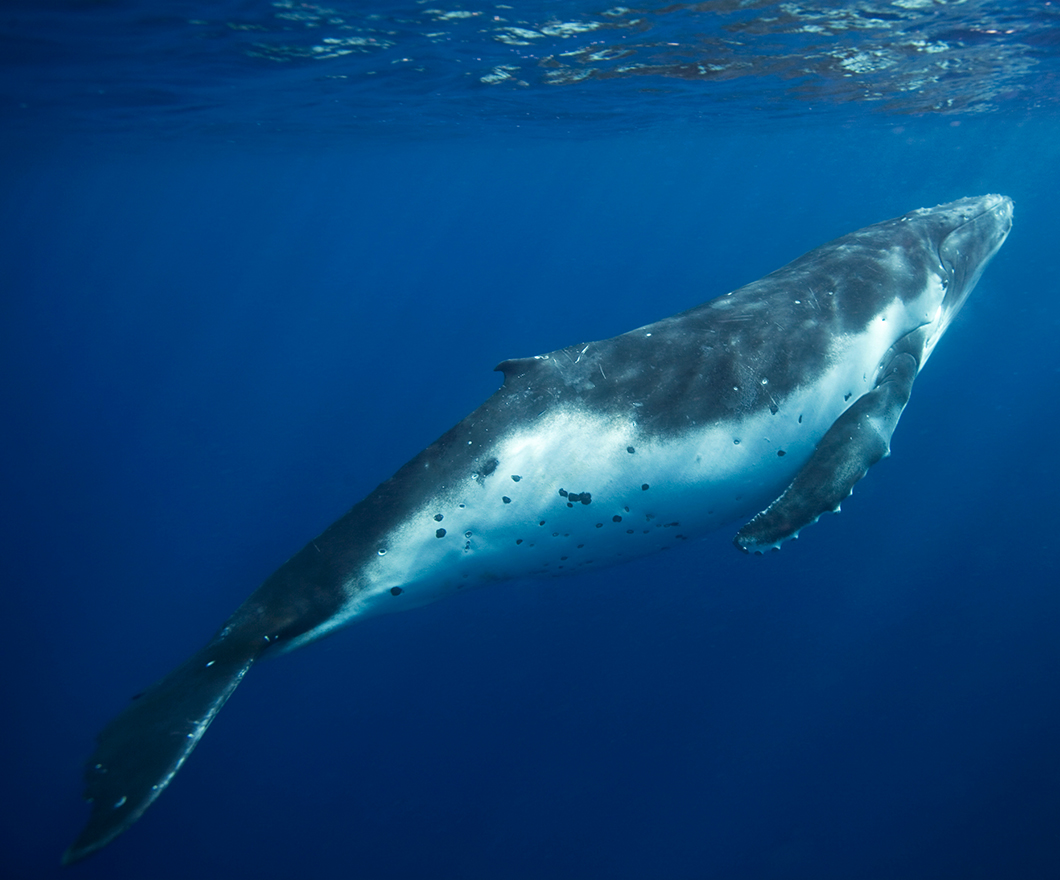
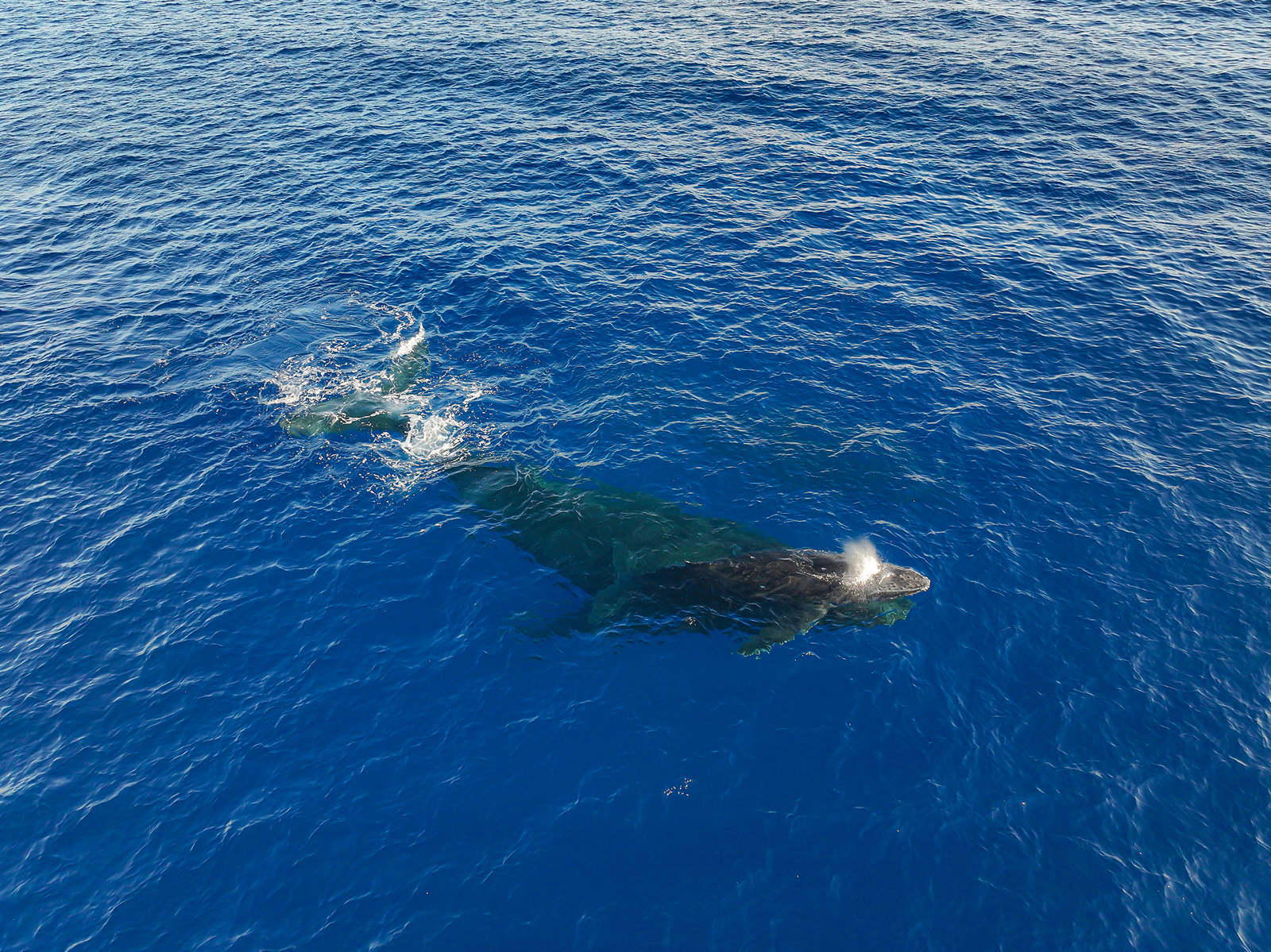
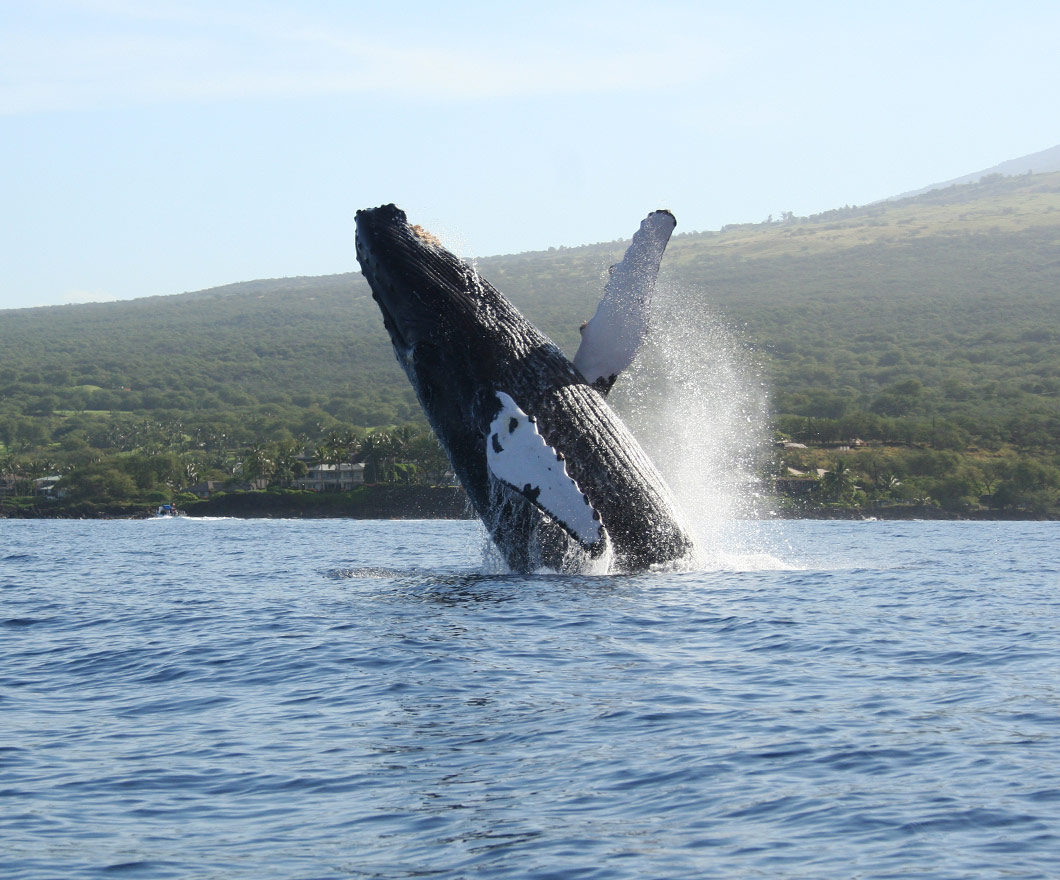
Witnessing humpback whales in their natural environment is one of Maui’s most memorable wildlife experiences. Each winter, thousands of North Pacific humpbacks migrate to Hawaiʻi, with most sightings occurring from November through March.

View more

Whale Watching
in Maui Hawaii

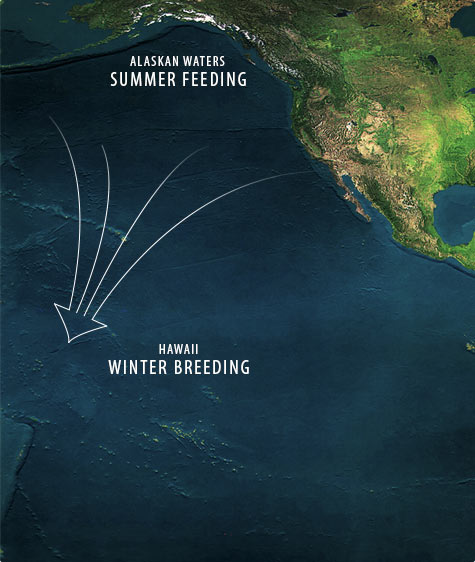
Hawaii’s humpbacks belong to the Central North Pacific stock, one of three major populations in the North Pacific Ocean. These whales migrate between Alaska’s cold feeding grounds and the warm, protected breeding waters of the Hawaiian Islands.

Marine biologists estimate that around 11,000 humpbacks return to Hawaiʻi each winter, making these waters one of the most important seasonal habitats in the world. Although early arrivals may begin showing up in October, the most reliable viewing occurs from November through March, with February offering the highest whale density.

Humpbacks choose Hawaiʻi for several reasons:
Warm water temperatures ideal for newborn calves
Excellent underwater visibility
Varied ocean depths for resting and socializing
Fewer natural predators compared to northern feeding grounds

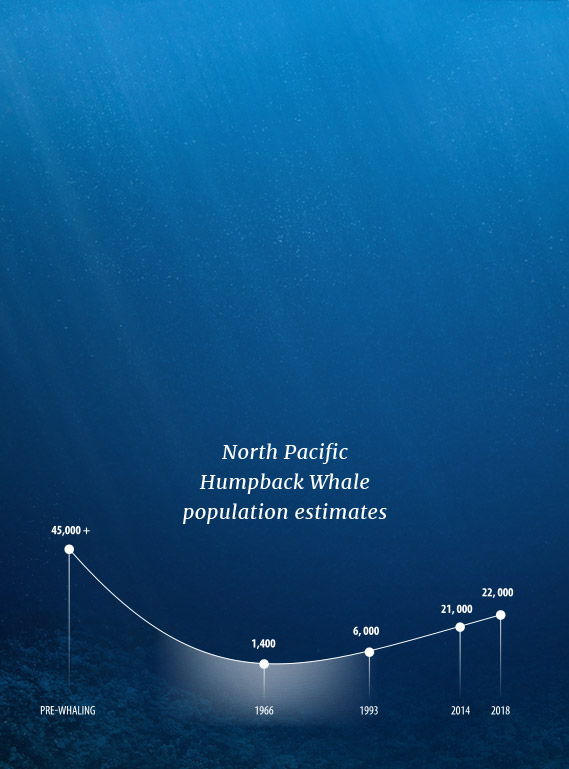
Conservation efforts over the last 50 years have helped this population rebound significantly. The Central North Pacific humpback stock has grown from an estimated 1,400 whales in the 1960s to more than 11,000 today, making it one of the most notable marine recovery stories in the world.

Conservation

Since the early 1970s, the North Pacific humpback whales (Megaptera novaeangliae) have been under protection by a variety of national and international agreements.

The principal U.S. agreements are the Marine Mammal Protection Act of 1972 (MMPA), the Endangered Species Act of 1973 (ESA) by the NOAA (National Oceanic And Atmospheric Administration), and the Convention of International Trade in Endangered Species of Wild Fauna And Flora Treaty (CITES) of 1973.

View more
Humpback whale conservation infographic
humpback whale

Conservation

Over the past five decades, these protections have transformed humpback whales into one of the most notable marine conservation success stories. Once driven to dangerously low numbers by commercial whaling, the Central North Pacific population, the group that migrates to Hawaii each winter, has rebounded dramatically through coordinated international efforts.

Today, humpbacks cannot be hunted, captured, or traded, and no government or private entity can “own” a whale. Their protection is a global responsibility, since these migratory animals cross vast ocean regions and multiple national jurisdictions. More than 180 countries participate in cooperative agreements that safeguard humpbacks throughout their annual migration routes.

In addition to federal protections, many nonprofit organizations in Hawaii and across the United States contribute to research, education, and habitat protection. Their work includes monitoring whale populations, studying behavior and migration, recording whale songs, and promoting responsible wildlife viewing practices to ensure that humpbacks remain safe while visiting Hawaiian waters each winter.

Biology

North Pacific humpback whales are the fifth-largest whale species in the world and typically weigh 25–40 tons, with newborn calves weighing around 1 ton at birth.

US UnitsEU Units

20

minutes is the
maximum dive
time

80,00036 200

poundskg is the weight of
an adult whale, equal
to 6 elephants

40

minutes a male
humpback's song
often lasts

10045

poundskg a whale
calf can grow
every day

50

years is average
life expectancy

3,5005 632

mileskilometers humpback
whales migrate
each year

Humpback whales can grow up to 60 feet in length, with females generally larger than males.

Their upper (dorsal) bodies are dark gray with distinct white patterns on their flippers and bellies. Most individuals live about 50 years, although some have been documented living into their 80s or 90s, and they reach sexual maturity between 5–7 years of age.

Humpback whale infographic
View more

Biology

Unlike many marine animals, humpbacks follow a strict seasonal cycle. They feed exclusively in Alaskan waters during the summer, consuming up to 3,000 pounds of krill, plankton, and small fish per day. During their winter stay in Hawaii, they do not feed at all. Their bodies rely entirely on the blubber reserves built during the feeding season.

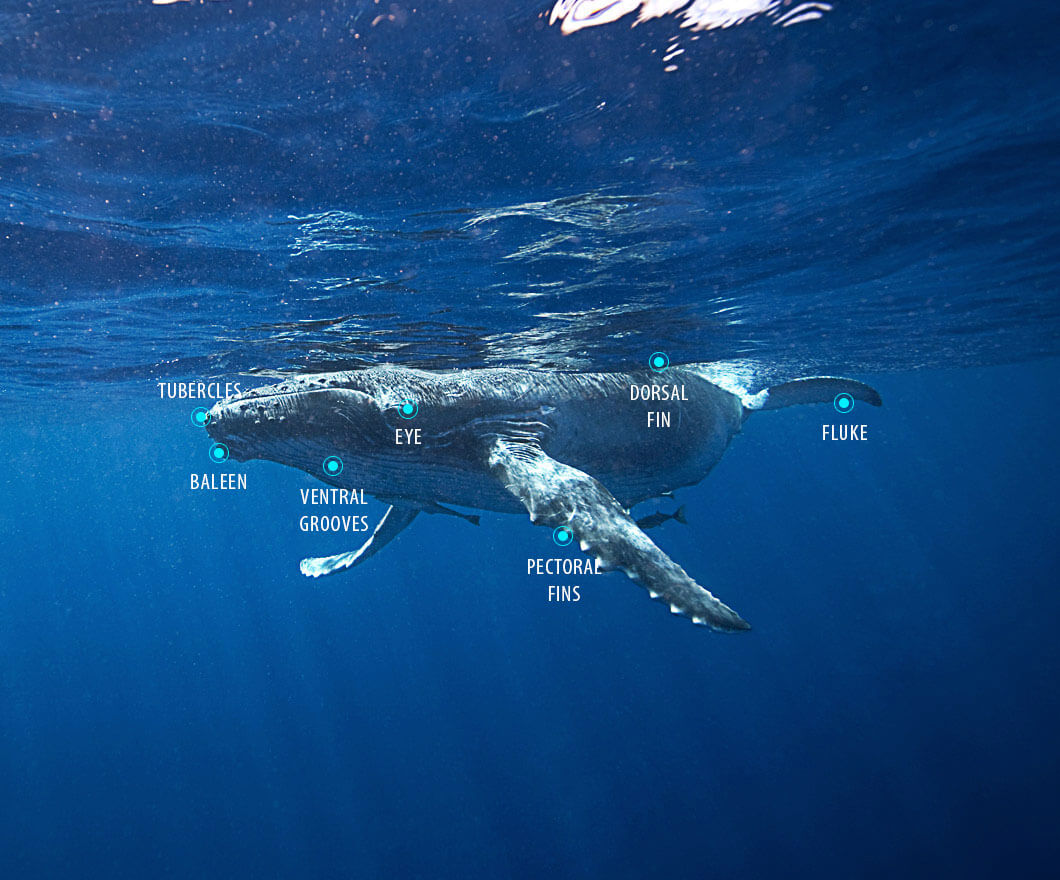
The name “humpback” comes from the pronounced arch in their back when they prepare to dive. Their heads are covered in rounded knobs called tubercles, each containing a single sensory hair that may help the whale detect movement—similar to a whisker on land mammals.

Humpbacks have 20–35 ventral grooves running along their underside, allowing their throat area to expand significantly while feeding. Compared to more streamlined whale species, humpbacks have a more rounded body that narrows at the peduncle, the muscular region before the tail.

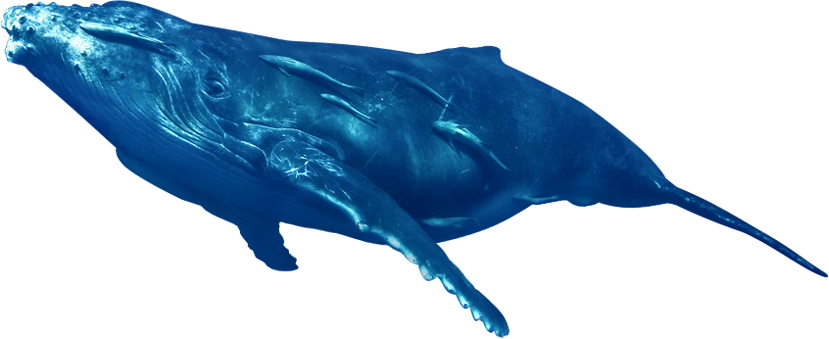
Their long pectoral fins, often up to 15 feet, are the largest appendages of any animal on Earth. These fins can range from all-white to all-black and often display distinctive patterns. The color patterns on their dorsal fins and tail flukes act like a fingerprint, allowing researchers to identify individual whales across seasons.

WHALES ARE KAMAʻĀINA

Hawaiian History
“Koholā”

Koholā (humpback whales) have been visiting Hawaiʻi since the ancient Polynesian era, roughly 1–600 AD.

The earliest Polynesian settlers arrive in Hawaiʻi,
navigating thousands of miles using stars, swells, and
wildlife signs, including seasonal movements of ocean
animals like whales.
References to Koholā appear in moʻolelo (stories)
and early oral traditions, indicating that whales were
recognized, named, and spiritually significant.
Whale bone and teeth become part of ceremonial
adornments used by aliʻi (chiefs),
symbolizing rank, power, and connection to the ocean’s
great creatures.
Carvings of whales and whale-human figures are
created across Hawaiʻi. The famous petroglyphs of
Olowalu, Pūhue, and Palaoa Hill provide archaeological
proof that Koholā were observed and revered.
Western explorers document humpback whales in
Hawaiian waters, confirming what Hawaiians had known
for centuries: Maui’s waters are among the most
important seasonal habitats for North Pacific humpbacks.
With commercial whaling long behind and conservation
efforts expanding, Hawaiʻi becomes a focal point for
humpback whale research, cultural revitalization,
and education.
Hawaii history

Archaeologists have documented Koholā petroglyphs, ancient stone carvings, across the islands, showing that whales have long been part of Hawaiian life. These carvings have been found in Olowalu on Maui, Pūhue on Hawaiʻi Island, and Palaoa Hill (Whale Hill) on Lānaʻi, including depictions of human figures riding on the backs of whales, a symbol loaded with cultural meaning.

View more

Hawaiian History
“Koholā”

Whales hold a meaningful place in Hawaiian heritage. Evidence of their presence appears across legends, chants, and ceremonial objects, from carved tools and instruments to adornments crafted with whale teeth. In traditional Hawaiian belief, Koholā are considered ʻaumākua, ancestral guardians, and are closely associated with Kanaloa, the god of the ocean and all ocean life.

Their appearance each winter was understood as part of a natural rhythm deeply connected to the Hawaiian people’s sense of time, season, and place. Because of this connection, Koholā are welcomed as kamaʻāina, or long-time residents of Hawaiʻi.

Migration

Humpback whales travel more than 3,500 miles from the cold Alaskan feeding grounds to the warm Hawaiian breeding grounds every winter. It is one of the longest migrations of any mammal on earth.

humpback whales migration graph
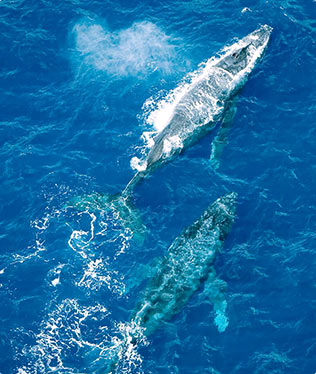
two humpback whales migrating

Marine researchers note that humpbacks typically travel 3–7 miles per hour with minimal rest. A one-way journey often takes 4–6 weeks, and in some cases as little as 36 days. Historically, 8,000–10,000 humpbacks visited Hawaiʻi each year, but the population continues to grow. As of October 2024, NOAA estimates 11,278 North Pacific humpbacks migrate to Hawaiian waters annually.

Why do North Pacific
humpback whales migrate
to Hawaiʻi?

Humpbacks return to Hawaiʻi for three primary reasons:

  • Breeding
  • Birthing
  • Raising their calves in safety

The warm, subtropical conditions around Maui offer ideal nursery grounds. With a gestation period of 11–12 months, calves are both conceived and born in Hawaiian waters. Scientists believe humpbacks favor Hawaiʻi for its warm temperatures, underwater visibility, varied ocean depths, and relative lack of natural predators.

Mating
& Birthing

The North Pacific humpback whales mate in Hawai‘i’s oceans. These whales are polygamous mammals, meaning they are not monogamous and will mate with multiple partners during a season.

Male humpback whales do not take part in raising calves. Genetic studies show that across a female’s lifetime, her calves typically have different fathers. After mating, females are rarely seen with the males involved.

View more
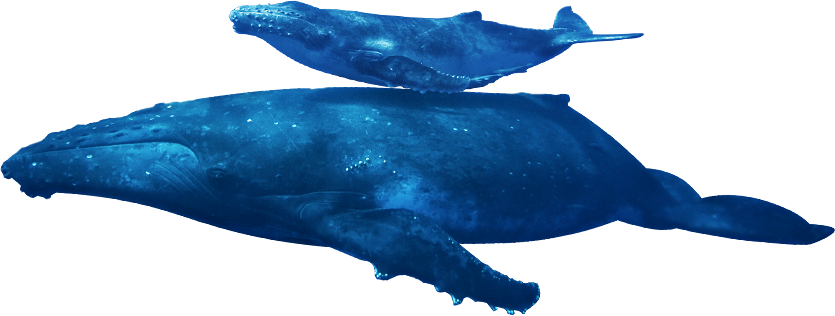
humpback whale mother and her calf
humpback whale conservation graph

12

months is a
humpback whale
gestation period

2000

pounds is an
average weight
of calves

1

inch per day
is the rate of
calves growth

turtle

Mating
& Birthing

maui humpback weightGenetic studies show that across a female’s lifetime, her calves typically have different fathers. After mating, females are rarely seen with the males involved.

Male whales do, however, compete intensely during the season. You’ll often see males guarding or escorting females during their time in Hawai‘i. Throughout winter, these males show highly aggressive behavior toward rivals, including chasing, vocal displays, bubble bursts, tail thrashes, and deliberate body strikes. These confrontations can cause injuries, though they do not fight to the death.

Humpback whales have a gestation period of 11–12 months. Calves are born at 13–16 feet in length and weigh roughly 2,000 pounds at birth. They nurse on their mother’s 50% fat milk, gaining about 100 pounds per day and growing approximately one inch per day. Humpback mothers are protective, attentive, and highly nurturing. Calves are typically weaned at 4–6 months old.

By early spring, young calves can be seen practicing essential survival skills near the ocean’s surface: breaching, tail slapping, rolling, and building strength. These early behaviors prepare them for the long migration back to Alaska and form the foundation of their adult survival patterns.

Surface
Behavior

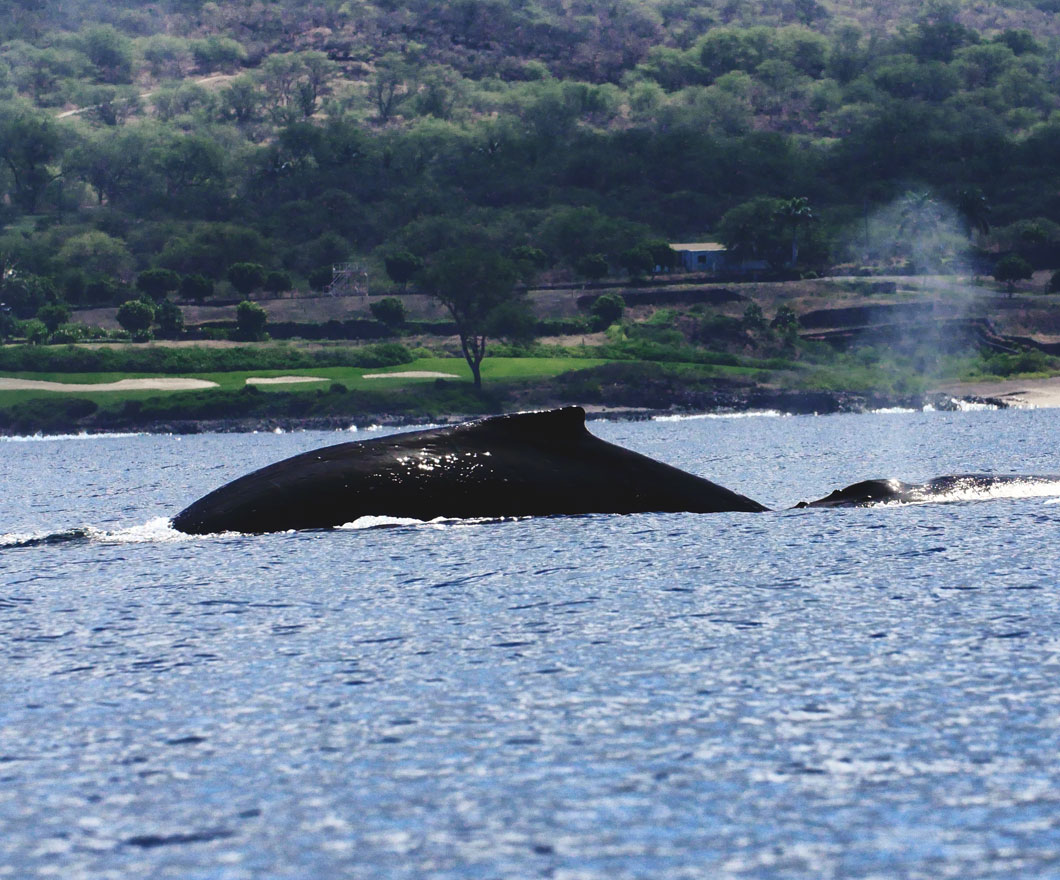
The graceful and intelligent North Pacific humpback whales display a wide range of surface behaviors. From Maui’s shores or on a whale watching tour, you may see these remarkable movements up close.

Each behavior serves a purpose, whether communication, navigation, protection, or play. Below are the most commonly observed behaviors during Maui’s whale season.

Blow Illustration White
Spy Hop Illustration White
Tail Slap Illustration White
Pectoral Slap Illustration White
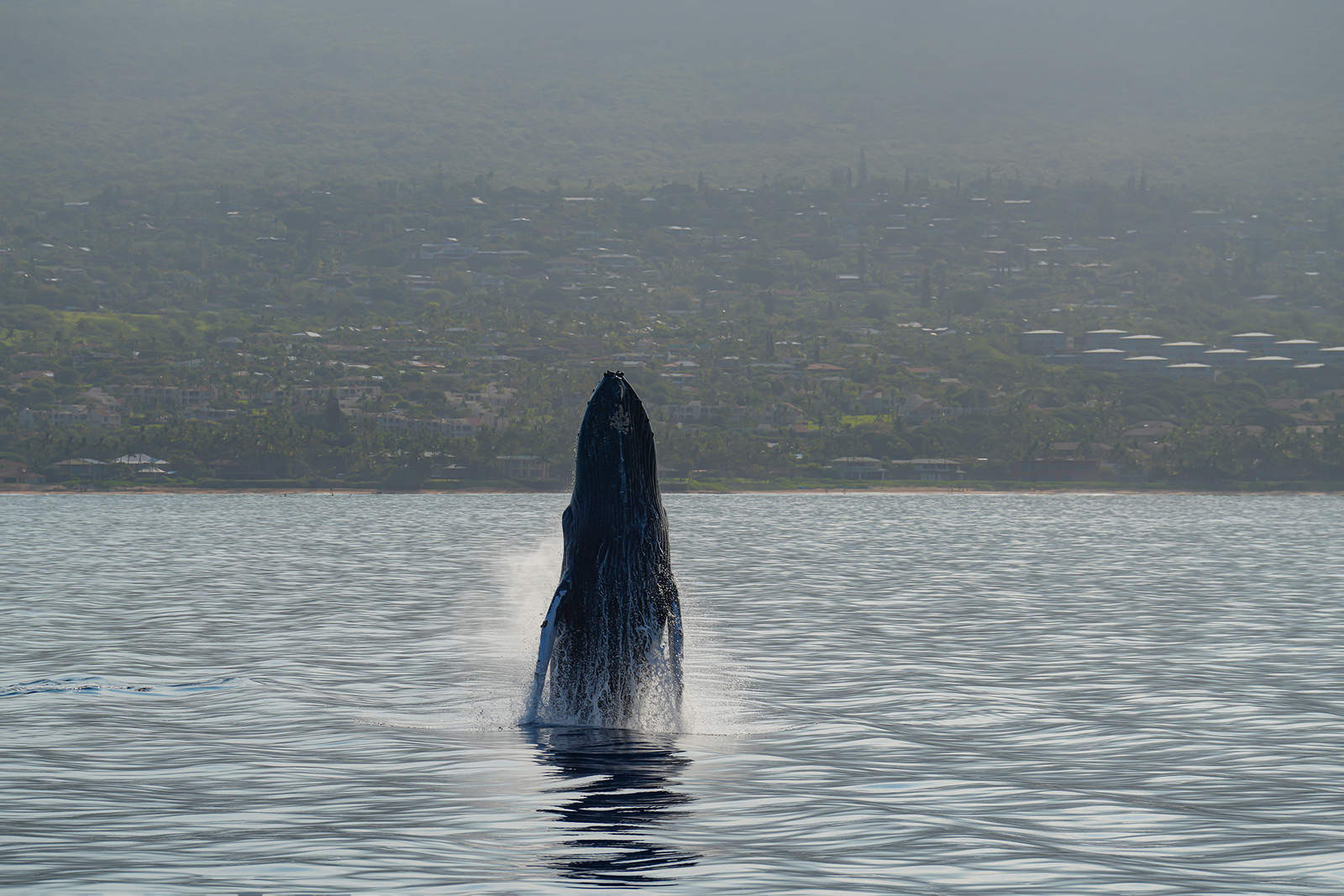
Head Lunge Illustration White
Peduncle Throw Illustration White
Peduncle Arch Illustration White
Fluke Up Dive Illustration White
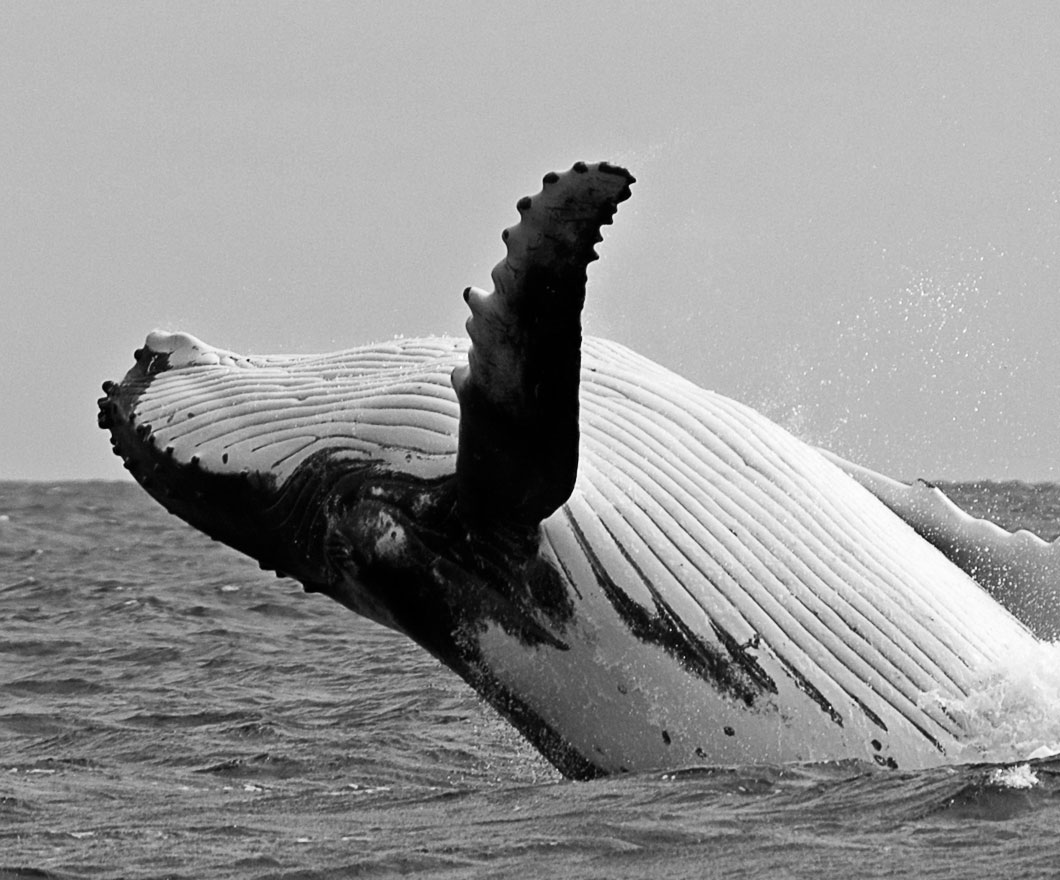
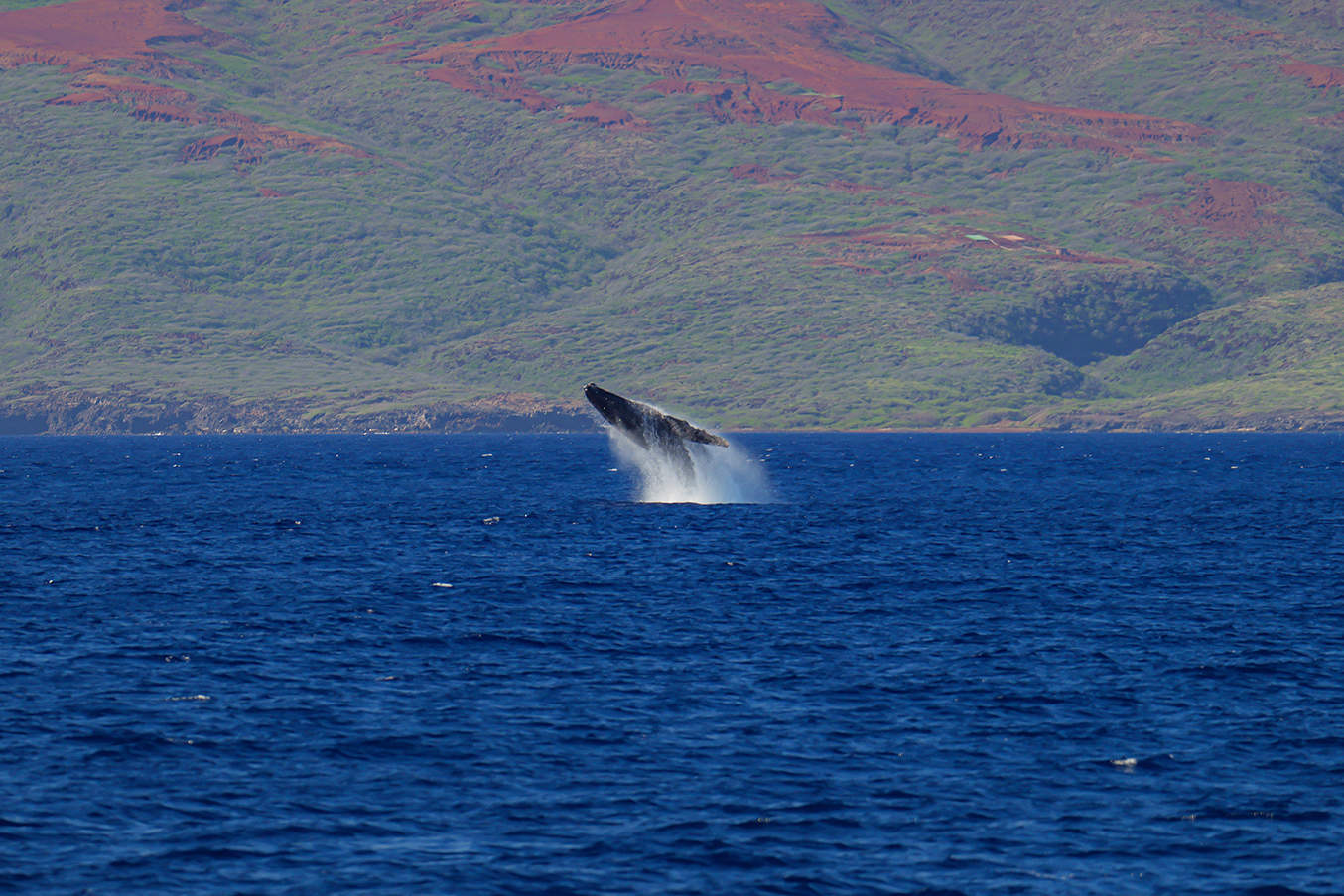
Breach Illustration White
Fluke Down Illustration White

Blow

A blow is the powerful burst of warm air and vapor that rises when a whale
exhales. It can reach 15 feet into the air and helps spotters
locate whales from a distance.

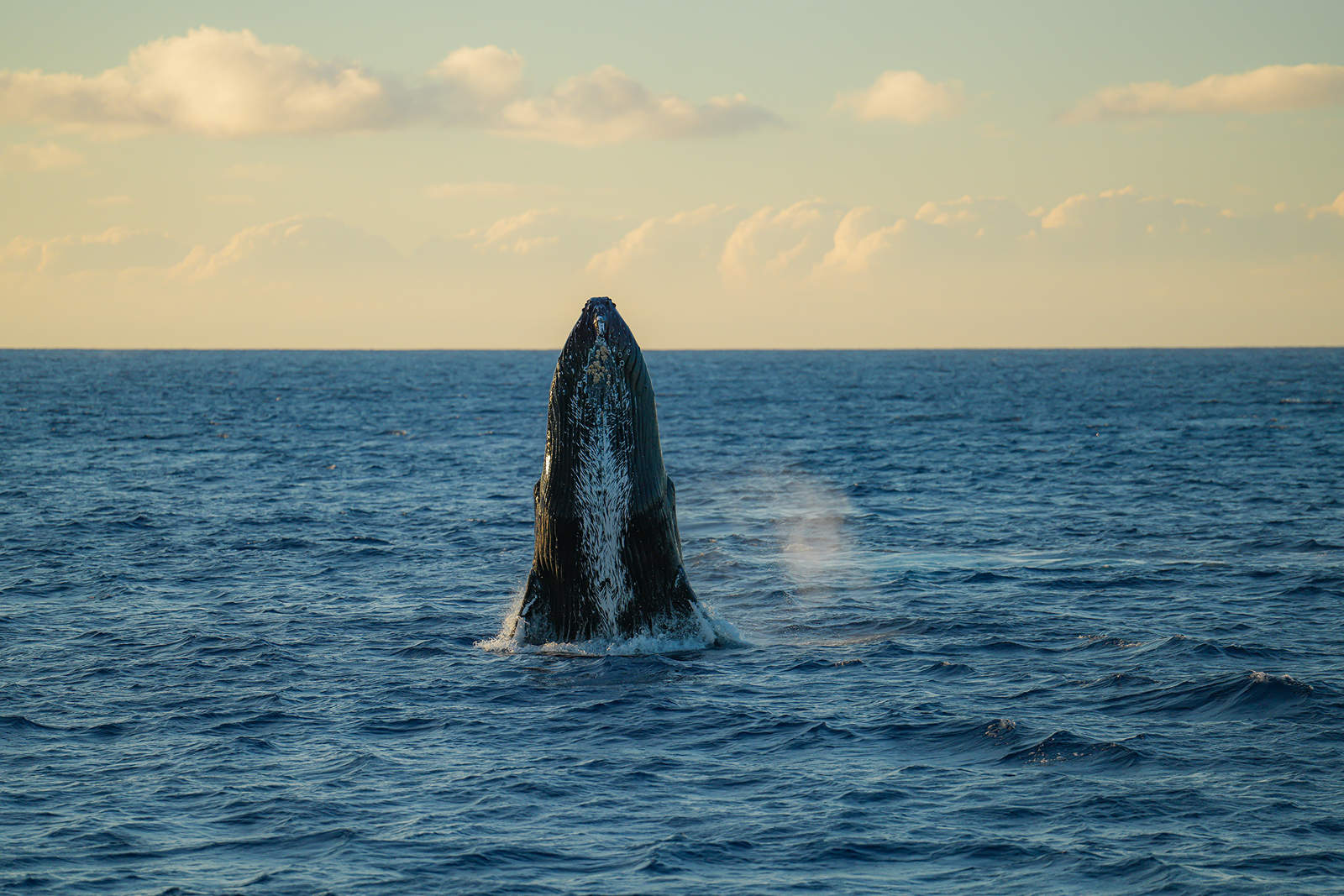
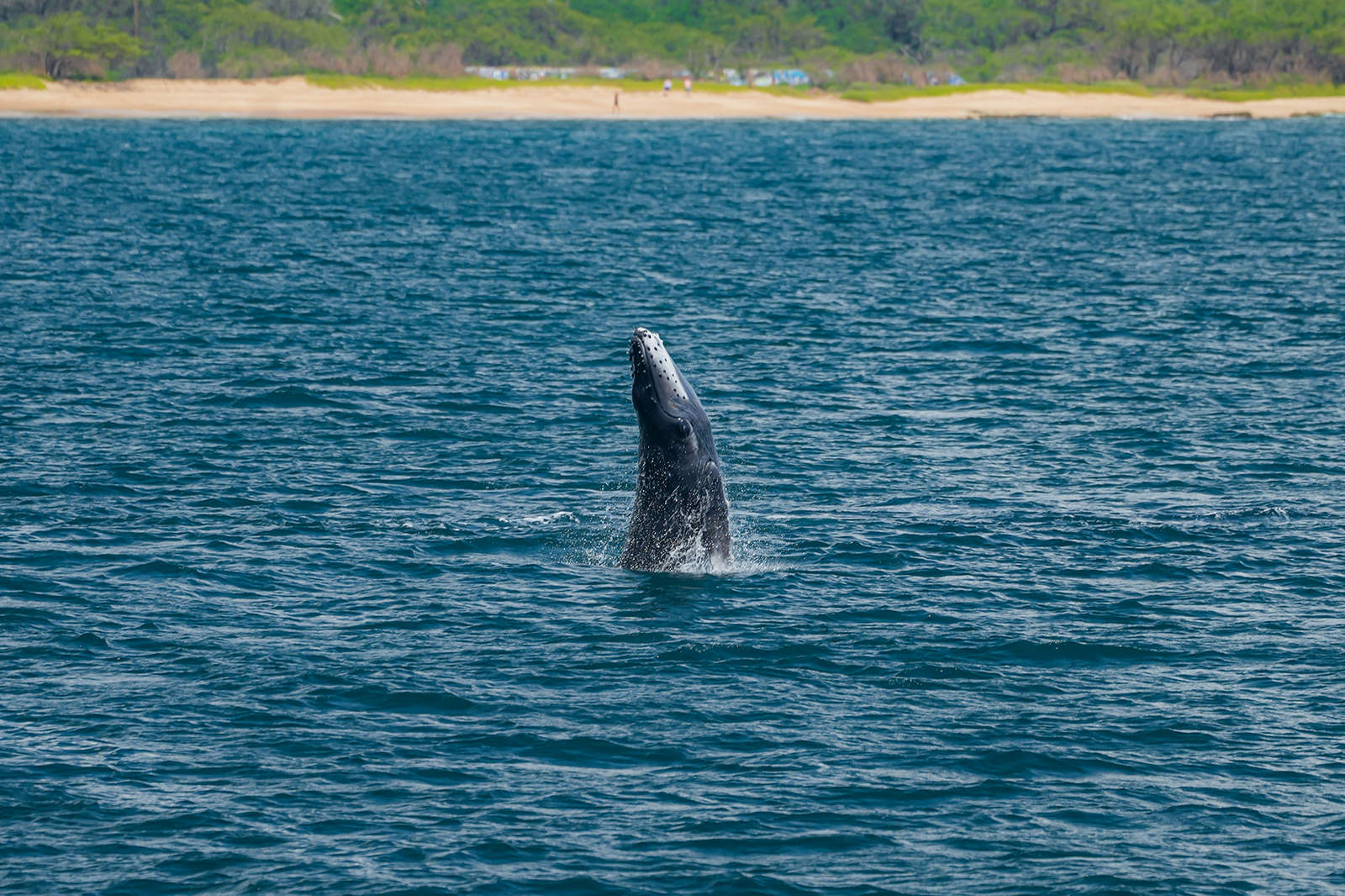
Spy hop

A whale lifts its head vertically out of the water to look around. This behavior
allows humpbacks to visually inspect their surroundings
above the surface.

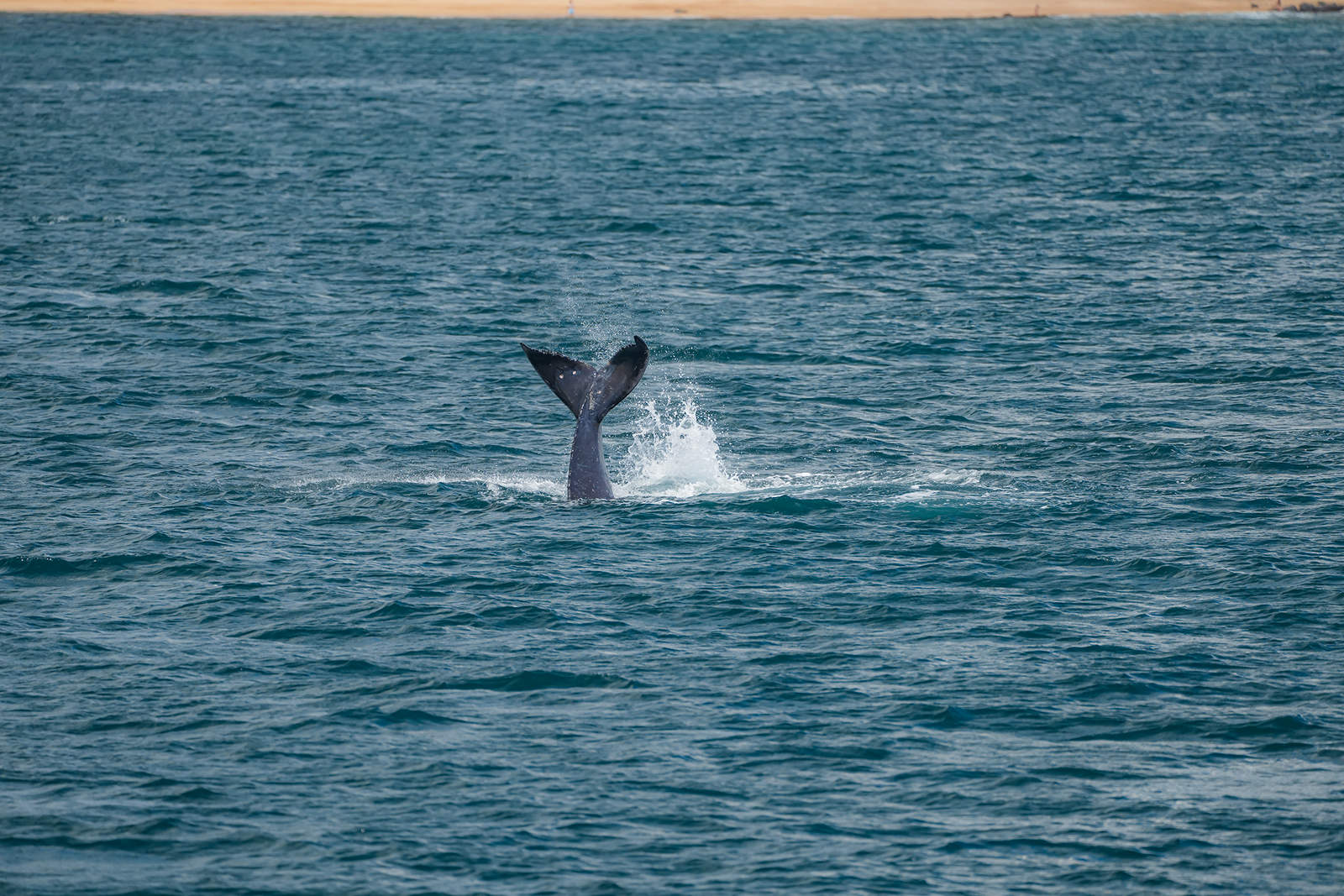
Tail slap

The whale raises its tail and slaps it forcefully onto the water’s surface. This
creates a loud sound that may function as communication or warning.

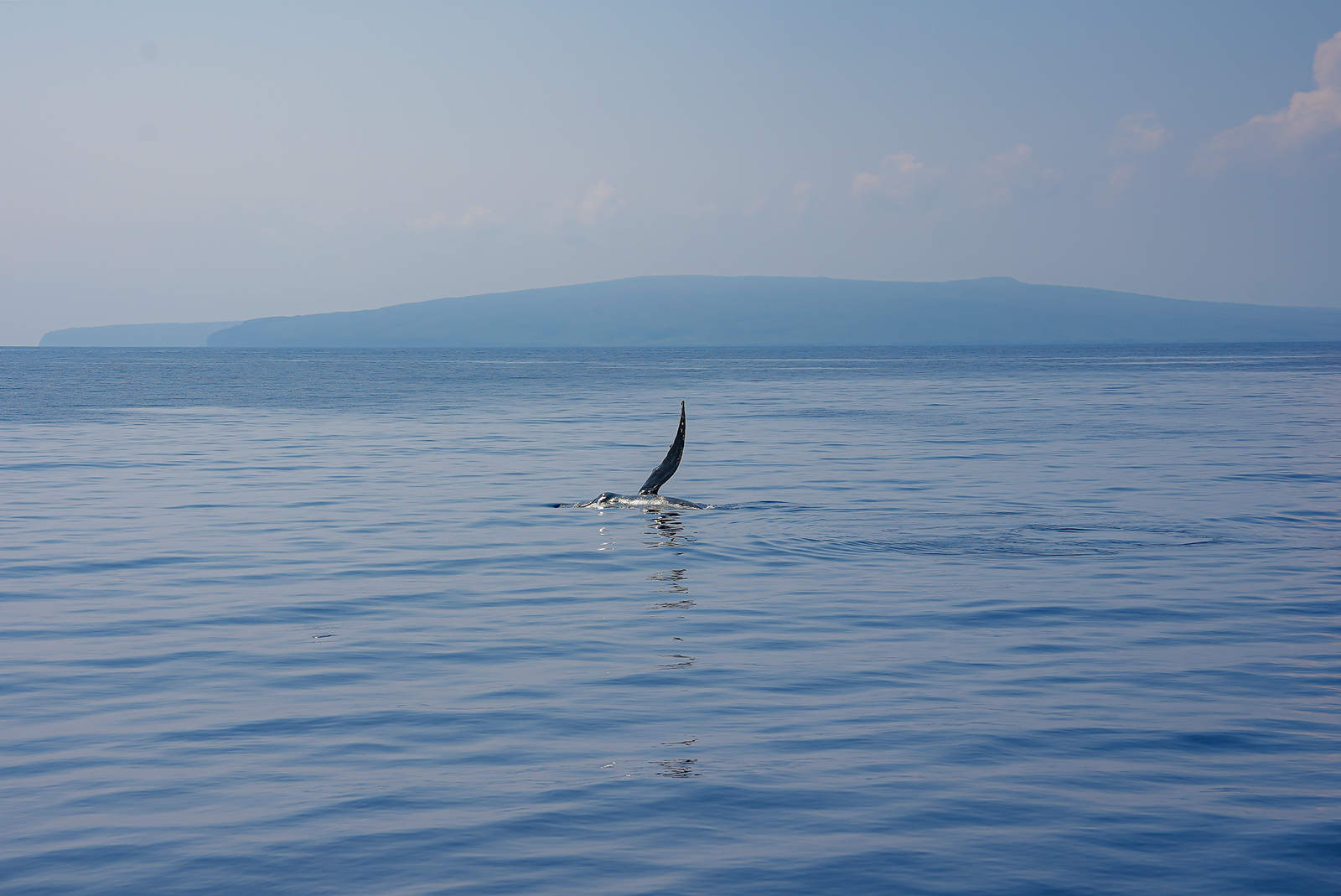
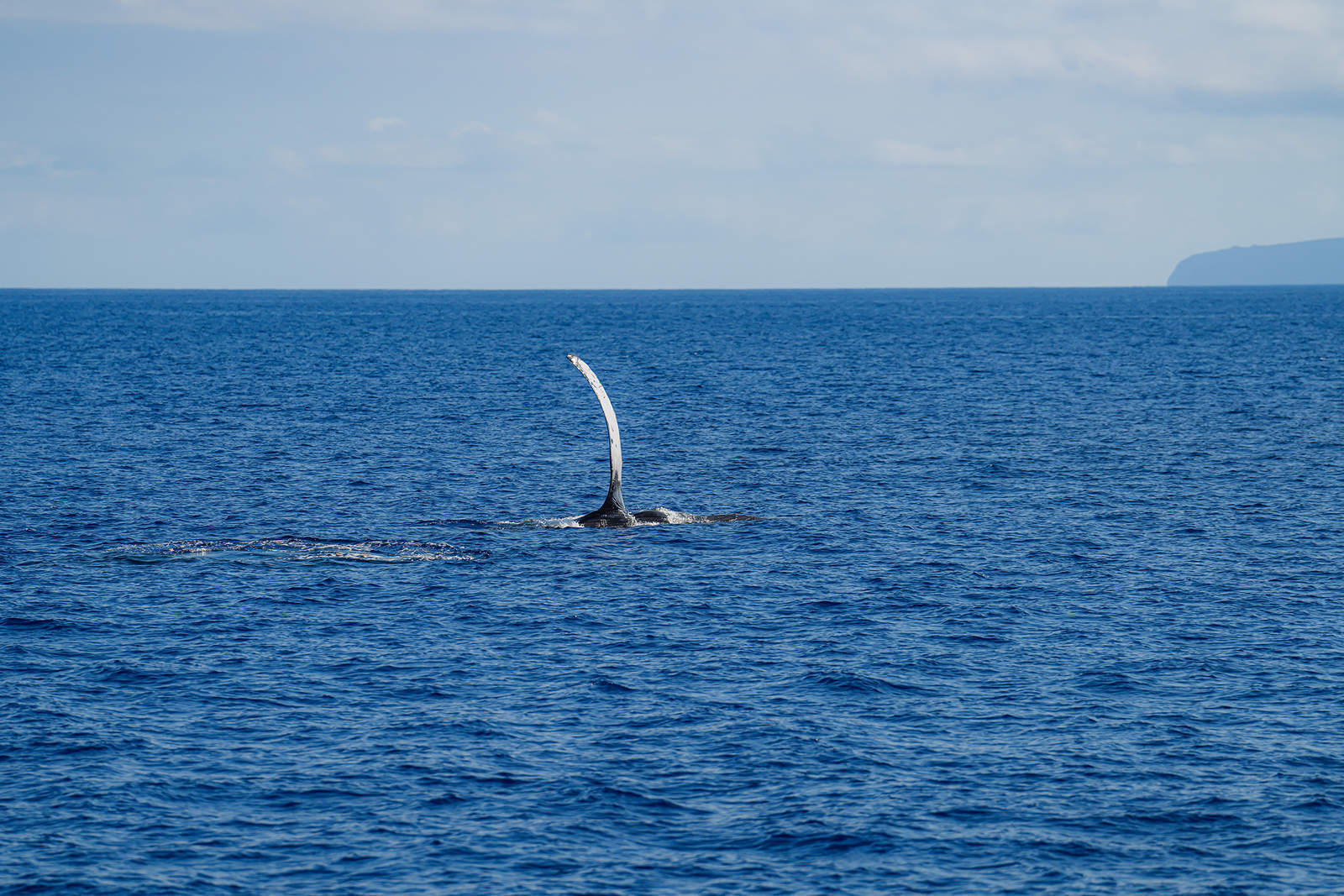
Pectoral slap

A humpback rolls to the side and hits the water with one of its long pectoral fins.
These fins can be up to 15 feet long, and the slap can echo
across great distances.

Head lunge

The whale propels its head above the surface in a sudden, powerful thrust.
This can signal assertiveness or agitation among nearby whales.

Peduncle throw

A humpback swings the back half of its body out of the water and slams its
peduncle (tail stock) sideways. This is one of the whale’s most aggressive displays.

Peduncle arch

Before diving or maneuvering, the whale arches the region between its dorsal fin
and flukes. This motion often precedes other behaviors and shows control and strength.

Fluke up dive

The whale raises its tail flukes high into the air before diving. The underside of each
fluke has unique markings, helping researchers identify individual
whales.

Breach

A humpback launches most of its body out of the water and crashes back down
in a dramatic splash. Breaching may be used for communication, play,
or parasite removal
.

Fluke down

The whale lowers its tail as it descends without lifting it fully above the surface.
This subtle behavior often signals a shallower dive.

Download guide
humpback whale song

12

miles away
their singing
can be heard

40

minutes is
how long their
songs can last

60

feet below the
ocean surface
the male's sing

00:00

Whale songs

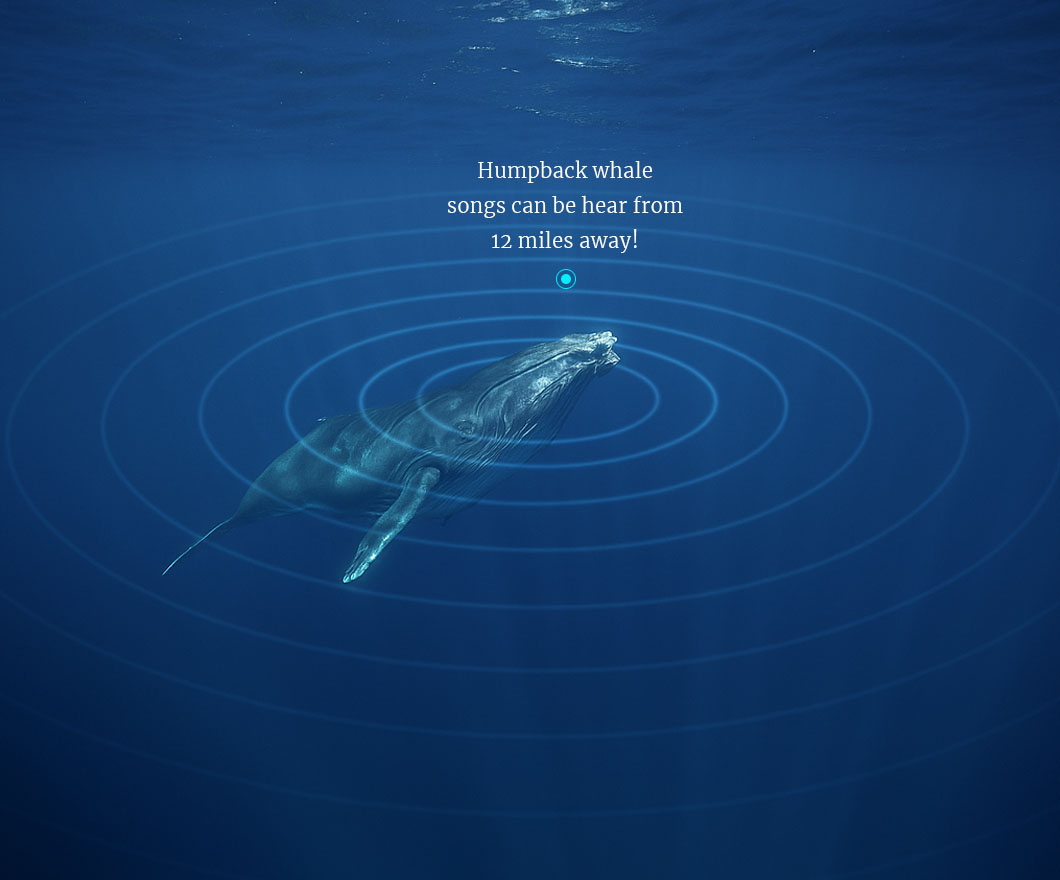
North Pacific humpback whales produce long, complex songs underwater, and these vocalizations can be heard from up to 12 miles away.

Not all humpbacks sing. Only certain males produce these elaborate songs, and they typically sing alone. Scientists are still learning why only some males develop this behavior.

View more
Whale songs

Male humpbacks typically sing 50 to 60 feet beneath the surface, hanging nearly motionless with their heads angled downward and their flukes upward. Their songs consist of repeating phrases and units that can last 20 to 40 minutes, creating a patterned performance similar to a musical composition.

Why Do Humpbacks Sing?

Researchers continue to study the purpose of these remarkable vocalizations. Evidence suggests singing may help attract females or deter other males during the breeding season. Each winter, researchers and nonprofit groups in Hawaiʻi record whale songs, documenting how they evolve and how patterns spread across the population.

One of the most fascinating findings is that whales often resume their song at the same point they ended the previous season, indicating strong memory and cultural transmission. Whale songs can sometimes be heard underwater by snorkelers in West Maui, especially near Lahaina, Kāʻanapali, and Kapalua.

Shoreline
Viewing

The Island of Maui is one of the best places in Hawaiʻi for whale watching from shore.

Whales can be viewed from coastal resorts, vacation rentals, scenic lookouts, and beaches. One of the most reliable stretches for shoreline viewing is the area along Highway 30 between Māʻalaea and Lahaina, where whales often breach and play offshore.

View more

Shoreline
Viewing

This beautiful coastal drive is also one of the windiest and busiest highways on Maui during winter. Visitors should stay alert and focused while driving, since it’s easy to become distracted by whale activity offshore. Always pull over to a safe area before stopping to watch whales.

Excellent shoreline viewing can also be found along the South Maui coast in Kīhei and Wailea, where calm winter conditions often give clear views of humpbacks resting or interacting offshore. On the North Shore, vantage points around Pāʻia Bay and Ho‘okipa Beach Park provide additional opportunities to spot whales during the season.

Maui shoreline map maui hawaii whale map

FAQ

Can you see whales in Hawaii in October?

Whale sightings in October are possible but uncommon, since only a few early-season humpbacks arrive that month.

What types of whales are in Hawaii?

Hawaiʻi’s waters host several species, including North Pacific humpback whales, false killer whales, sperm whales, orcas, Cuvier’s beaked whales, pygmy killer whales, dwarf killer whales, short-finned pilot whales, and melon-headed whales.

What is the best month to see whales in Maui?

February is considered the best month for whale watching on Maui, with the highest concentration of humpbacks in local waters.

When can you see whales in Maui?

Humpback whales can arrive as early as October, with sightings increasing through November. The official whale season runs from December through March.

Why do humpback whales go to Hawaii?

Humpback whales migrate from Alaska to Hawaiʻi each winter to mate, give birth, and raise their newborn calves in warm, protected waters.

Which Hawaiian island is the best for whale watching?

Maui is widely regarded as the best island for whale watching due to its shallow, protected basin that attracts large numbers of humpbacks each season.

What is the best time for whale watching in Hawaii?

Whales can be seen throughout the day, but early morning and sunset often offer the best viewing conditions. Midday (11 am to 3 pm) provides the brightest overhead light for spotting behavior at the surface.

Best Boat Tours

Maui whale watching tours offer
some of the most memorable wildlife experiences in Hawai‘i.

If you’re ready to see the North Pacific humpback whales up close, Maui offers several excellent ways to experience them from the water.

You can join a classic whale watching tour, combine your trip with snorkeling, enjoy whale encounters during a romantic sunset cruise, or charter a private boat for a more personalized outing.

When you head out on the water, you can expect to be on a reliable ocean vessel designed for comfort and safety. With a professional captain and an experienced crew, guests learn how to spot whales, understand their behaviors, hear the latest research, and often listen to whale songs through onboard hydrophones. Most tours provide everything needed, including snorkel gear, safety equipment, and meals or beverages when applicable.

Sound off Sound on